top wine brands worldwide

More Hospitality Industry Guides Ithaca & Tompkins County Research Meetings, Incentives, Conventions, Events Mintel Academic Includes profiles of major wine companies. Includes several relevant reports, such as Wine (US), Wine Tourism in North America, Wine (UK), Champagne and Sparkling Wine (UK), and Still, Sparkling & Fortified Wine (UK). Business Insights, Essentials Search for Wine and select Market Share Reports. Sample titles include Top Wine Makers Worldwide, Wine Production By State, Top Table Wine Brands, and Top Wineries. Business Source Complete Wine Industry Profiles for individual countries from Datamonitor. Search for "wine industry profile". For every wine-producing country in the world, these reports identify market size, analyze the competitive landscape, and forecast market performance. Final Grape Crush Report 2015 California & US Wine Sales The U.S. Wine MarketCatalog Record National Agricultural Statistics Survey: California Grapes.

California Crop and Livestock Reporting Service. Reports annual grape acreage in California by type of grape and by location, from 1991 through 2012. Concise overview of the business side of the global wine industry which includes distribution, marketing, and competition. Includes numerous statistics such as production, consumer consumption, and land under vine cultivation. << Previous: Industry Next: Market Research >>Along with producing exceptional wines that honor the distinctive character of the California Central Coast region, JUSTIN shares The Wonderful Company’s dedication to actively making a difference in the world. Founded in 1981 by Justin Baldwin, JUSTIN specializes in Bordeaux-style varieties, such as Cabernet Sauvignon, Merlot and Cabernet Franc, combining time-honored tradition with the latest innovations. We use sustainable processes whenever possible. And when we’re not making wine, the staff contributes to the neighboring communities—from recycling cork, to creating water reclamation ponds, to volunteering at local schools and food banks.

From just a vineyard in Paso Robles to making Wine Spectator's Worldwide Top 10 list in 2000, to being named Wine Enthusiast's 2015 Winery of the Year, we have spent 35 years making award-winning Bordeaux-style wines.
best buys wine 2013 DRINK IN THE BEAUTY
best advanced wine books The JUSTIN Tasting Room is the perfect locale to begin your JUSTIN wine-tasting adventure.
pictures of wine for the kitchenYou'll savor a variety of carefully selected vintages while looking out onto the stunning hills of western Paso Robles.
best wine country near paris JUSTIN is the only winery on the Central Coast to retain a full-time chef.
best selling red wine 2013
Executive Chef Will Torres and his staff work daily to pair the company’s acclaimed wines with fresh seasonal and vineyard grown offerings.
best gift for the wine lover We never forget how fortunate we are to be in one of the premier wine-making areas in the world.
best wine regions in the united statesWe take an active part in protecting the health of the region, from following sustainable farming practices to establishing water reclamation ponds and investing in programs that improve the community.
best wine catalogue design HELPING OUR WINEMAKERS HELP OTHERS
best cheap white dry wine JUSTIN encourages our employees to be active in our community and to help make a difference.
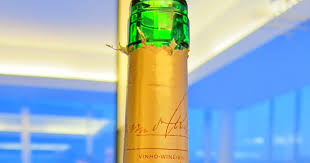
To date, employees have donated their time and money to over 50 charitable organizations. LETTING NO CORK GO TO WASTE JUSTIN is part of ReCORK by Amorim, a program that takes used corks and turns them into useful new products—like flooring tiles, insulation, soil conditioner and sports equipment.Welcome to Global Wines, Inc. “As an importer and distributor, our mission is to provide our retail customers and partner distributors with profitable, high value wines that resonate with consumers. By sourcing products directly from the producers, we are growing brands that we believe will establish a unique and lasting presence in the wine market.” Since 2007, Global Wines, Inc. has established pride in its high quality, high value wine portfolio, exclusively owned brands, and unmatched customer service. Our programs offer simple requirements and provide our customers with short and long-term return, and extensive, overall benefits.• Our dedicated representatives form strong relationships with their customers and are able to thoroughly understand their needs and individual business models.
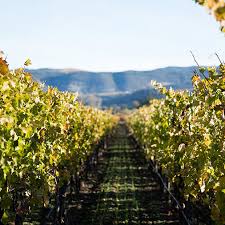
Our emphasis is to ensure that our customers achieve their own goals. Our goal is to utilize the strengths of our team of industry professionals to surpass our competitors in quality and control of product, in-house marketing and distribution capabilities and complete customer service. With an initial launch in Massachusetts and strong growth throughout New England we are continuing to develop a dynamic strategy that can extend and scale itself to reach national industry growth.The bottle is a little narrower than in the '70s In the early 1970s, Mateus Rosé was the most popular wine in the world. The Queen of England demanded it. Jimi Hendrix was photographed drinking it out of the bottle. Jimi Hendrix and friend Today, younger wine drinkers haven't even heard of it. To baby boomers, Mateus reminds them of bygone pleasures that are no longer groovy. If it's mentioned at all in wine stories, it's as a cautionary tale; i.e., rosé is serious today, not like in the Mateus era.

There comes a time when you stop thinking your parents were wrong about everything. Your parents liked wine coolers, yes, but they also liked Chenin Blanc and locally made beer and Coca-Cola made with sugar, not high fructose corn syrup. You may have conceded they were onto something with Sherry. Perhaps their generation's embrace of marijuana wasn't as misguided as the 30 Year War on Drugs that followed. Is Mateus Rosé ripe for rediscovery? I wish there were still hipsters in my neighborhood in San Francisco, because I can imagine it becoming the PBR of wine. Because Mateus Rosé is not just cheap, ladies and gentleman. I say this knowing that the Kool Kids Wine Kritiks will never share their orange wines with me, but .... Mateus Rosé is pretty good. Here's how I came to this revelation. I was in Lisbon, judging a competition of Portuguese wines. It was an interesting cultural exercise. On my panel there were 5 Portuguese, a Swedish guy (Per Karlsson) and me.

Per and I don't have anywhere near the same palate. We disagreed frequently and by large margins: him giving gold and me grimacing, and vice versa. But occasionally the two of us lined up against the Portuguese, particularly on the topic of what a Portuguese wine should taste like. One wine that both Per and I liked, the Portuguese hated, saying, "This could be first-growth Bordeaux." To which we said, "Yes, it's that good." Five against two: No medal. Anyway, we had a flight of rosés that were dreadful, one after another. Nothing to like about them. Over-extracted, overly tannic, lacking in fruit character, oaky. Not flawed in the sense of corked or infected, but just not made for drinking pleasure. Another writer, Ryan Opaz, heard our plight and said, "Maybe you should have had Mateus Rosé in that flight." That evening, I found myself at a dinner table with Antonio Oliveira Bessa, CEO of Sogrape, the largest wine producing company in Portugal. Sogrape now owns Sandeman and Gazela and some other big brands, but the company built its fortune on Mateus Rosé.

Bessa had reserved a stylish restaurant for the evening for his guests, wine judges from other countries, and brought some of the company's nicest wines to pour. I said, thank you for the fine wine in front of me, but could I have some Mateus? In so doing, I was getting in touch with my inner Queen. Queen Elizabeth was at a private party at the Savoy Hotel in London in the early '60s when she was dissatisfied with the wine selection and asked for some Mateus; the hotel manager had to send out for a bottle. Fortunately, Bessa and I were in Lisbon, not London, and the restaurant had some in stock, chilled even. I wish I had tried it blind in that group of crappy rosés for perspective. I believe Mateus would have earned a gold medal. It's a medium-light pink, very slightly fizzy, with good freshness and balance. There's a nice aroma of rosehip, and the wine is mostly dry but not bone-dry. It is more floral than fruity, with dried raspberry notes coming out more with food.
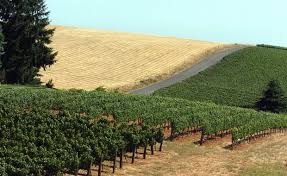
Bessa says about 10 different red grape varieties go into Mateus. Most come from the unheralded Beiras region; it is a very cheap wine (about $5 in the US). Even though Sogrape owns 1500 hectares of grapes, it buys almost all the grapes for Mateus. "We need grapes where we can control the freshness for our red and white wines," Bessa says. "It's easier to buy grapes (for rosé.)" This makes sense because rosé grapes are harvested earlier than red-wine grapes, so late heat spikes might take them to ripe but not overripe. And all those grapes are specifically grown and harvested for rosé, which is a major reason why Mateus tastes better than a lot of more expensive rosés. Many wineries make rosé by bleeding off some of the juice to concentrate their reds, so their rosé is just a byproduct. In other cases, wineries take the red wine grapes that aren't up to snuff and dump them in their rosé, and it shows. Sogrape is now making less than 2 million cases of Mateus.
It's a lot, but the company can be pickier with its grapes than in the 1970s, when it was selling 4 million cases a year in the U.S. alone. Mateus started to fall from grace for a number of reasons. Who knows why objects lose their cool? The late '70s were an era when people not only had rocks for pets, but paid money for them so they could have an official Pet Rock package for validation. But Sogrape made a bad situation worse in 1983, when it sued its U.S. distributor, Schenley, to try to regain distribution rights, and lost. So Mateus not only wasn't selling well; a resentful distributor had total control. Sogrape could have slowly folded. At the time, it was barely diversified. Sales were good in Iraq -- Mateus Rosé was Saddam Hussein's favorite wine -- but there are only so many dictators in the world. So Sogrape began purchasing well-known Portuguese brands, culminating in its 2001 acquisition of Sandeman. Most of the rest of Sogrape's portfolio is not well-known in the U.S., and distribution trouble is a reason for that, but they are very popular wines on the domestic market and the Portuguese drink a lot of wine: 42 liters per year per capita, 2nd in the world for countries over 2 million population.