which is best indian wine
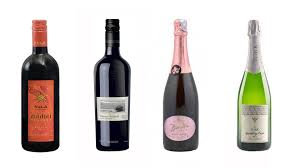
7 Best Indian Wines You Must TryAnoothi Vishal | Updated: June 23, 2016 15:46 ISTTweeterfacebookGoogle Plus RedditRelated VideosNapa, a wine countryAditya goes down the memory lane in SanawarRhone wine regionLike most people, I suspect, my first taste of Indian wine was in an Indian restaurant some years ago. Of course we ordered it. I don't drink beer, we'd done G&T, we'd had Indian everything else: so why not wine? It wasn't the greatest experience, and it was a long time before I tried Indian wine again; but I recently had the chance to sample several, and talk to those who made them, at a three-day celebration held in London. • What to drink with Indian dishes India now exports almost £5million of wine a year, according to the Indian Department of Commerce. Its vineyards are spread across a vast area, with a commercial vineyards as far south as Theni in the state of Tamil Nadu, and as far north Ratlam in Madhya Pradesh. There are several dozen wine producers, of whom Sula is the biggest and best known - it make a very creditable sauvignon blanc, which you can find in Marks & Spencer.

Wine is not as new to India as you might imagine; the Arthashastra, the earliest surviving text to document wine drinking, suggests it was known and enjoyed in the fourth century BC. But never took root as a popular drink, and of course under the Muslim Mughal emperors intoxication was prohibited. Colonials (the British and Portuguese) did their bit, making enthusiastic attempts to reintroduce wine-grape cultivation, but their progress was destroyed by the phylloxera epidemic of the late 19th century. The modern era of Indian wine really began in the seventies and eighties at about the same time as the modern era of English wine. We have many more advantages however; not least that our proximity to the established wine regions of mainland Europe enables ready access to expertise and know-how as well as to equipment. "You need to remember that even the yeast we have to import," says Dimple Athavia of Grover Zampa Vineyards. "There's a very high import tax which we have to pay on everything from barrels to bentonite.

Nothing is produced for us at home. It makes it very expensive. But that's the kind of commitment that people in India are happy to make and as a result of heavy investment in wine making and viticulture, the quality of the wine is going up." Even more salient, I think, is the fact that India is not a wine drinking culture. The habit of popping to the vineyard down the road to fill up a carafe to go with tonight's dal is not exactly commonplace, and this has an impact on wine styles and their development.
black ink wine where to buy "I have occasionally seen, in really rural India, people driving up to a winery and buying two litres to take home in a can to drink but it doesn't happen often," says Melvin D'Souza, co-founder of Soul Tree Wines.
best red wine for pizza"Wine in India is mainly drunk in the cities of Mumbai, Goa, Delhi and Bangalore, places with a strong international influence, and where young Indians who go abroad see wine as aspirational."
best wine bars on long island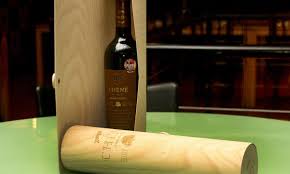
As a result, the grapes in cultivation are the mainstream international varieties: sauvignon blanc, chenin blanc, syrah and cabernet sauvignon are popular and zinfadel was planted with the specific aim of pleasing the Americans. Nor is this a country of wine natives. The British grow up drinking wine from all over the world, even if the know nothing about making it, so exposure to styles and flavours is broad from the outset. And while this has doubtless helped us to find, in sparkling wine made from champagne varieties, our vinous raisin d'être (there's a grape pun somewhere there), in India they're still looking.
buy white wine online indiaThe other day I tasted a surprisingly good 100 per cent chenin blanc sparkling wine, made in India by York Winery, some decent viognier and sauvignon blanc and quite a lot of red wines that had been destroyed by too much oak (perhaps partly because of the difficulties buying second use barrels in India).
best kind of cooking wine
But there is not yet anything distinctive about Indian wines; no point of difference or unique "Indian-ness". You simply feel that you are tasting wines from a new wine producing country with a warm climate, which is groping towards reaching a generic international standard. Maybe no less than you'd expect from producers who say their focus is on selling wine to Indian restaurants and hotels in either the big Indian cities or towns and cities all over the world. But it doesn't make Indian wine a must order.
buy cheap wine online canadaThe industry is already beginning to diversify, with big investment from companies such as LVMH, who have a Chandon India outpost, at one end, and unusual set-ups such as Fratelli Wines, collaboration between a Tuscan whose father sold shoes in India, and Indian brothers, at the other end. I'm looking forward to seeing what happens next. Made for M&S by Sula, one of India's biggest producers, this is a very serviceable sauvignon blanc.

It tastes steady and even. With hints of mango and lots of lemon and green melon flavours. Try it with spicy-marinated prawns. Nasik, India, 13%, M&S, £7 Sumptuous Christmassy red made by sleek Waitrose-head-of-wine-turned-rumple-haired-vigneron Justin Howard-Sneyd using grapes from his own vineyard. It's based on grenache gris and grenache blanc in the blend too. Gorgeous spicy warmth but backbone too. made in miniscule quantities - there are only 1,144 bottles. , £35 (or£28 club price) Screamingly good value red wine from Tesco at their new everyday low price which means that no one has to faff about looking for a promotion, you can just buy it becuase you're thirsty. grenache is the main grape of the southern Rhone. This wine is from the cheaper Languedoc-Roussillon, a sweet, ripe, flow of red-berried juice, with a waft of dried herbs.The good thing about writing on wine in a country which is still a nascent market is that one gets to revisit the shelf again and again to see how things are coming along.

Thus, what would pass as a strong habit, bordering on addiction, can be underwritten as an earnest effort to merely keep oneself well informed of what’s happening in the wine world. We still don’t have the concept of vintage in India, which means that even the top wines will more or less taste similar, no matter which year they are made in. Part of the reason for this is that we don’t store wines long enough to see a marked difference show up, but the other reason is that very few wines are made in a manner to exhibit individuality over uniformity. Nevertheless, the quality of wine produced in India has been going up steadily over the years, as wineries get better at what they do.Here then are my top picks of red wines – some are properly cellar-worthy while others will pack a mean punch wrapped in a silken glove. With all of them, I recommend decanting for a good part of an hour (if not two) before serving.A big brooding boisterous red, the kind that makes steaks melt. The fruit is present but sits beneath the oak which impart rich chocolate-coffee-toasty primary notes.

With a name like Chêne (French for oak) one wouldn’t expect anything else.A very complex reserved wine, layered and structured. This wine needs decanting —minimum 2-3 hours but if you can manage 4-5, even better — and then it evolves into an elegant full-bodied wine.A very drinkable fruity red wine with body and length. This grape is India’s rising star and KRSMA does a good version, fruity and yet with some spiced richness.The only Tempranillo exploit out of India, and one good enough to take on Spanish Rioja. If this is a sign of things to come, Tempranillo stands to become a big Indian superstar.A very drinkable wine, absolute crowd-pleaser. The first red wine that put India on the world wine map. Michel Rolland was crucial in helping put this Shiraz-Cabernet wine together. It’s made in both our winemaking states but, as always, prefer the Bangalore-origin stock over Nashik.The most iconic red in India, one that definitely ages well. Cabernet normally doesn’t do great in Indian soils but this one is quite the anomaly.

Also available in Magnums which will age even better.A juicy floral-fruity red wine with intense berry-spice notes. The oak is gentle and never masks the fruit. Again, this winery is paving the way for Malbec to become an Indian staple.A red that shows an impressive breadth of flavours but not heavy or daunting at all. Mostly Shiraz but also Cabernet, the philosophy for this blend is guided by one simple principle: only the best estate wines go into it.Another serious and worthwhile expression of Cabernet Sauvignon (I already mentioned that India generally makes below average Cabernet S.). This is a balanced wine, decent fruit and then honed further with barrel ageing.A good expression of Syrah with plenty of fruit on the nose and palate. There have been some inconsistencies somewhere along the road but the wines are always well above average.One very well-priced Reserve-level balanced wine with nuanced complexity. It drinks well straight out of the bottle (as in no need to decant, not that you can give the bottle lip service).