wine in china report
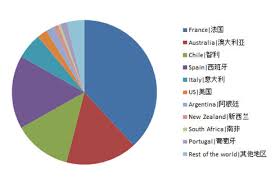
If you purchase a report that is updated in the next 60 days, we will send you the new edition and data extract FREE! Why buy this report? Gain competitive intelligence about market leaders. Track key industry trends, opportunities and threats. Inform your marketing, brand, strategy and market development, sales and supply functions. Want to find out more about this report?The total value of wines entered the Chinese market jumped by almost 30% year-on-year during the first six months of 2016, reaching 1bn USD. The total volume was up by 24% to hit 223m litres (297m bottles), maintaining the speed of the first quarter.New China wine import figures: France and Australia lead the growth in first quarterSee below the fresh infographic on China’s main source of imported wines, and how big is their market share.Click to expand: Chinese wine import figuresThe import figures back up recent research from Wine Intelligence that Chinese consumers are spending more on wine purchase and drinking more often.
The free trade zones opened in several coastal cities in China are also bringing positive effects, according to the Ministry of Commerce of China.Tianjin free trade zone, the only free trade zone in Northern China, saw imports of alcoholic beverages increase by 86.5% in volume and 69.1% in value during the first six months of 2016. 90% of the total is wine and beer, officials said.France continues to lead as China’s biggest source of imported wines (38% of the total volume and 45% of the total value). The total value increased by 36% during January to June of 2016.The price of imported French wines, on the other hand, rose by 17.6% compared to the same period in 2015.There is a 28.5% jump on average price of Italian wines.41% more Australian wines entered China in the first half of 2016 compared to last year. Though down by 6%, the price of Australian wines is still the second highest ($5.92/litre) among China’s top ten source countries of imported wines, only next to New Zealand ($9.62/litre).

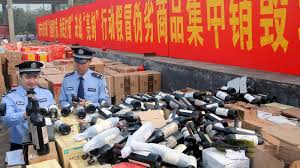
Chile and Spain continued to show strong growth in both volume and value, though both saw slight decreases in average price.USA as China’s 6th largest source of imported wines suffered a 9.8% decrease in import value and 9.5% drop in average price.South Africa, on the other hand, is the only country of the top 10 to see a significant drop in both import volume (down by 22%) and value (down by 44%). All rights reserved by Time Inc. (UK) Ltd. may republish part of the content from the site without prior permission under strict Terms & Conditions. China's thriving counterfeit wine sales have pushed advisors at the French Foreign Trade Advisory Board to quietly leak a controversial report on fake wines in the Asian nation, despite opposition by French government officials. The report details the depth of the counterfeits problem, showing that fake wines are not just the work of a few criminal rings but a sizable underground industry. The Comité National des Conseillers du Commerce Extérieur de la France (CNCCEF) is a public organization of foreign trade advisors from various industries, appointed by the French foreign minister.

As the group's website states, "For more than 115 years, on a voluntary basis, they have been placing their experience at the service of France's economic presence around the world." One of their subgroups is the Wine & Spirits Commission.
wine and food pdf China is not the only source of counterfeit wines, but the country's rapid growth as a wine market and loose intellectual property laws have made it a boom market for fakes.
best wine with asianFrance has been a prime wine exporter to China, hence the CNCCEF's investigation.
buy old wooden wine boxes Sources tell Wine Spectator that the group's report was suppressed for two years by French political leaders, following a firestorm that erupted when the president of the Wine & Spirits Commission revealed the estimated volume of counterfeit French wines saturating the Chinese market.
best wine bar los angeles
"Counterfeiting is a touchy subject. Everyone knows more or less what is at stake, but for the brands it can be a very difficult subject to deal with," said Edouard Marienbach, an expert on track-and-trace technology and one of the authors of the report.
buy low beer and wine Concerned by the absence of a coherent national, and potentially international, strategy to fight wine counterfeiting, the advisors recently released the report, which includes ambitious proposals for using technology, communications, legal action and job training as countermeasures.
wine os x fonts"The CNCCEF believes it's their job to publish this study despite the opposition from an important wine council and the Minister of Agriculture," wrote the commission.
best wine for flavor
Their assessment of the problem is eye-opening. "For every real bottle of French wine in China, there is at least one counterfeit bottle of French wine, and the situation is only getting worse.
best red wine for ladies in indiaIt's enormous," said James de Roany, former president of the CNCCEF Wine & Spirits commission and a business consultant.
best wine for wedding cheap The advisors believe the problem has also contributed to a drop in sales. "The situation of imported French wine and spirits in China has deteriorated significantly since 2014," noted the report, blaming the drop on high tariffs, predatory pricing, the discovery of other wine regions, but mainly, Chinese consumers' distrust of wines "too often reputed to be counterfeit." "We therefore feel [it is] all the more important to spread this study so that precise and operational measures can be quickly implemented to stem the scourge of counterfeiting."

Stories of abandoned chicken farms converted to illicit bottling lines make headlines, but the report reveals a more insidious business environment. In China, it alleges, the main counterfeiters are importers, distributors and subdistributors. Their goal is to reduce their purchase price, increase the available volume of a "brand," and avoid import duties and taxes, which can rise as high as 48 percent. "This is where you see the industrialization of counterfeiting," said de Roany. "It's generally a very high quality, which makes it very difficult to tell the real from the fake." Brand squatting—acquiring the Chinese rights to a foreign wine's name—is also on the rise, according to the commission. And no brand or region or grape is safe. "All of the Greek grape variety names were recently the object of a trademark request, which costs little for private individuals," says the report. Scotch, Cognac and wines from all countries are vulnerable. Chinese wines and spirits face the same battle.
"It is widely acknowledged that some domestic wines are diluted to four times their volume." Last month, the state-owned food conglomerate COFCO won a case in the Wujiang District People's Court in Suzhou against 27 local supermarkets for selling counterfeit bottles of COFCO's Great Wall wine. Several of the defendants settled, but others claimed they'd been given proper paperwork from the firms selling them the fakes. There are signs that the Chinese authorities are beginning to listen to foreign brand owners. Last August, the owner of a wine company in Yantai, his wife and six partners were convicted of making and selling wine with counterfeit labels of well-known foreign wines. Their operation had started out as a legitimate company, importing bulk wine and bottling it under their own brands, but they soon realized they could make more money selling counterfeits of well-known brands. The accused received prison terms ranging from two years to four and a half years in prison and fines of up to $161,000.

"For me, the most important element is our proposal to penalize the distributor for receiving and dealing in stolen goods," said de Roany. "In China, they are likely to hand down severe sentences to make an example. Thus, there is an issue of political will and that is why my colleagues at the CNCCEF believe we should publish the study. Raising awareness of the reality of the damage of counterfeiting is for them—and for me—the best way to get things done." De Roany lost his longstanding appointment at the CNCCEF two months after he gave his estimate of the volume of counterfeits at a wine trade conference in London. His revelation angered several Bordeaux winery owners and the region's trade group. "We have to stop giving numbers to counterfeits. Anyone who does is a liar," said Fabian Bova, director of the CIVB, arguing that an illicit trade is impossible to quantify with precision. While the commission concedes that statistics on illegal trade are unavailable, evaluations within a certain range can be given just as they are for the drug trade.