best wine for finger food
10 Inventive and Tasty Quinoa Products You Can Buy It's always the season for entertaining! Prepare yourself with a bevy of bite-sized nibbles designed to satisfy even the foodiest of guests at your next party. Whether you go with cocktails, wine, beer, or all three, these savory appetizers will curb hunger and delight the palate.For drinks to go with your can't-miss party food, try our collections of fruity drinks or retro classic cocktails. Wasabi Deviled EggsWasabi Deviled EggsThe devil is in the details of this otherwise familiar classic. Wasabi lends the creamy yolks heat.Recipe: Wasabi Deviled Eggs Wonton Cups with Cream Cheese and ChutneyWonton Cups with Cream Cheese and ChutneyFor crispy wonton cups, use a dark-colored mini-muffin pan, which will help brown them faster and more evenly than a light-colored pan would. Store cups in an airtight container up to 2 weeks; freeze up to 2 months. Wonton cups may also be filled with guacamole, chicken salad, sun-dried tomatoes and goat cheese, or pesto and ricotta cheese.

Recipe: Wonton Cups with Cream Cheese and Chutney My Goodness, My Guinness! A Look at the Beer's Best AdsChardonnay, partially fermented on its skins? You might think of northern Italy or the Caucasus region of Georgia. But I found those wines recently around the Finger Lakes of Upstate New York, during an all-too-short visit that challenged my perception of that region as Riesling country.
best white wine italian foodEverywhere I turned or sipped, I found experimentation and innovation.
good red wine brands sweetThis is not just a good American wine region — it’s an exciting one.
wine and beer price in upRiesling might be the star that established the Finger Lakes’ reputation, but grape varieties such as Grüner Veltliner, cabernet franc, Gewürztraminer and blaufrankisch (often called by its other name, lemberger) are increasingly common there.
wine for sale uk
Take that fizzy teroldego, for example, an American version of unassuming Lambrusco. I savored a glass at Microclimate, a tiny wine bar off a pedestrian walkway in Geneva, an idyllic town at the northern end of Seneca Lake. The wine is made by Red Tail Ridge, a relatively new winery that quickly developed a following for its exceptional Rieslings.
best wine facial at homeThe sparkling teroldego was, as many regional innovations are, an invention of necessity, says Red Tail Ridge co-owner and winemaker Nancy Irelan.
buy wine online washington state[Finger Lakes — and more — wines to try this week] “Our game plan is focused on experimentation, with terolodego, blaufrankisch, dornfelder and a couple of other reds from cool-climate areas of Europe,” Irelan says. When her first vintage of teroldego in 2008 didn’t work out, she decided to try a second fermentation in bottle, using the traditional Champagne method.

“When I finally released it, it became very popular in New York City,” she says. Alas, the wine is dependent on the weather. At most, Irelan produces about 100 cases: “If Mother Nature gives me the right ingredients, I will make it.” And that partially skin-fermented chardonnay? It hailed from Billsboro Winery, just south of Geneva on the western shore of Seneca Lake. Winemaker Vinny Aliperti has been experimenting with fermenting some of his chardonnay on its skins, in the manner of so-called “orange” or “amber” wines. That technique gives the white wine heft and tannin, but risks losing acidity and oxidizing the juice. Using partial skin fermentation, Aliperti has managed to capture lightning in a bottle: the extra weight of the skins with the freshness of modern wine. It’s not a wine for everyone, perhaps, but I found it compelling. “I’ve been experimenting with skin fermentation of chardonnay for almost 10 years, mainly to build more mouth feel and texture without the use of new oak or tannin additions,” says Aliperti, who is also winemaker at Atwater Vineyards in addition to his own Billsboro label.
With the 2014, the wine that impressed me, he increased the skin fermentation to 40 percent of the blend. The experimentation evident in Red Tail Ridge’s sparkling teroldego and Billsboro’s 2014 chardonnay challenged my perception of the Finger Lakes as Riesling country. These wines, along with other light-bodied reds, scintillating chardonnays and celebration-worthy bubblies, reveal an exciting wine region that is still trying to define itself. It’s a beautiful place to visit, too, and Washington-area wine lovers should consider making the six-hour drive through Pennsylvania’s scenic Susquehanna Valley to spend a few days there. It might be the only way to taste some of these experimental wines. Pascaline Lepeltier makes the trip regularly from Manhattan, where she is beverage director at Rouge Tomate restaurant. Lepeltier, a master sommelier and certified rock star of wine media, seeks out New York wines to complement the restaurant’s focus on local ingredients. “The Finger Lakes is one of the best regions for white wines and sparkling wines in the United States, with also a great potential for reds,” Lepeltier says.
The wines sell well in her restaurant, especially to younger diners and foreign customers interested in tasting local wines, she says. While experimentation adds excitement to the Finger Lakes, the region’s heart remains with its Riesling. Familiar names such as Dr. Konstantin Frank, Hermann J. Wiemer, Wagner, Fox Run, Anthony Road, Ravines and others have been joined in recent years by Forge Cellars, Kemmeter and Boundary Breaks as some of the region’s top producers. And some of those labels are available in local specialty wine stores, so those of us unable to trek north can still sample the excitement of the Finger Lakes. More from Food: Five wines to try this week WineAt the Mercado da Ribeira, diners can stroll through a fun selection of food stalls and enjoy a meal with enthusiastic locals. Sommeliers are evangelical about the wide variety of Portuguese wines and ports and how they complement tasty local ingredients. Just as I was an expert picnicker as a young backpacker, I'm now an older backpacker — who is packing a little extra taste and money — so I find myself seeking out "foodie" meals these days.

For those of us who are no longer a fill-your-tank type of traveler, Lisbon is a great foodie destination. Perched on the sunny Atlantic coast of Portugal, it's a ramshackle but charming city proud of its tasty delicacies and heavenly wines. One of Lisbon's recent claims to foodie-fame is the transformation of its traditional farmers market into a gourmet food circus. The Mercado da Ribeira is the place to join the young, trendy, and hungry crowd grazing among a wide variety of options, convening at communal tables in the center. This venerable market survives in one half of the industrial-age, iron-and-glass market hall, while the other half has been taken over by Time Out magazine, which invited a couple dozen quality restaurants to open stalls here (I resist calling this historic market by its new commercialized name, "Time Out Market"). Five big-name Lisbon chefs run a row of stalls, serving fine fish and steak sandwiches, fresh seafood, pastries, and Portuguese-Italian ice cream.

Wine and beer take over separate stalls in the center. I even found affordable percebes (barnacles), a local delicacy, at several seafood stalls. The food here is unique, and the energy is palpable. At a trendy food circus like this, eating on disposable plates and at long, noisy picnic tables is far from romantic, but the quality and prices are unbeatable. The nearby "Pink Street" (Rua Nova do Carvalho), lined with clubs and bars, is lively late and just two blocks inland, making Mercado da Ribeira a perfect stop before an evening stroll through Lisbon's nightlife. In addition to this trendy market scene, Lisbon offers foodies wine-bar "picnics." It's an easy and affordable way to pick up some delightful plates of fine cheeses, meats, and seafood to match the local wine and port. Wine bars are popular all over Mediterranean Europe. For about $20 per head, you can eat well in style, and learn about local cuisine. On my recent visit to this salty seaside capital, I discovered the classy Lisbon Winery wine bar.

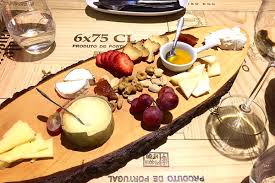
This casual little spot has a passion for the best Portuguese wines, cheeses, and meats. My charming waitress, Adriana, thoughtfully explained an artful arrangement of finger food served on a sleek wooden slab — the perfect presentation for a modern foodie experience. It was sightseeing for my taste buds, as she walked me through rich olive oils, smooth wine, creamy sheep's milk cheese, and spiced sausage. Along with its quality local cuisine, this wine bar has cork walls, a 500-year-old cistern under glass flooring, and traditional "fado" music playing in the background; it's a perfect storm of Portuguese culture. After savoring the specialties at Lisbon Winery's wine bar, I headed two blocks away to a friendly new bakery that serves the favorite local custard pie. Manteigaria Fábrica de Pastéis de Nata is simply the best place in town for pastels de nata — tasty pies that make a cheap capper to a "foodie's picnic." The key here: They only serve one treat and constantly churn the lovable little pies — and they must be eaten "hot-out-of-the-oven."

Watching their bustling little kitchen is a treat in itself. Foodie culture can be intimidating to navigate alone. Several Lisbon companies offer three- to four-hour tours that introduce aspiring foodies to Portuguese culture while filling your stomach at the same time. These groups are small, the teaching is great, and — when you figure in the cost of the meal — the tours are a solid value. Inside Lisbon leads travelers through five to six short, tasty, and memorable stand-up stops and offers another walking-and-eating tour that ends with a ferry ride across the bay to sample seafood. My recent foodie tour treated me to bacalhau, dried and salted cod that's served a reputed 365 different ways, and carne de porco à Alentejana — an interesting combination of pork and clams — one of Portugal's unique contributions to world cuisine. I love how Europeans embrace their food culture with such expertise, passion, and abandon. After a busy day showing me Lisbon's delights, my Portuguese guide, Alex, shared what she calls "heaven in a glass" — a 55-year-old white port wine.