cost of glass of wine
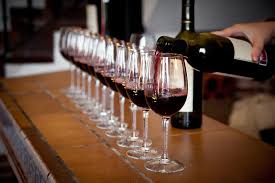
can make a great mealeven better. Our wines have been carefully selected to complement our dishes and enrich your dining experience. Olive Garden is committed to offering our guests world-class Italian wines as well as domestic wine selections. Olive Garden partners with many prestigious winemakers in Italy, including the Rocca delle Macie winery in Tuscany, which is also the site of our Culinary Institute of Tuscany, to source a selection of distinct and delicious wines. To further broaden the choice and variety we offer our guests, we also serve fine quality wines from award-winning domestic vineyards in California, Oregon and Washington. Olive Garden's wine program has won several awards of its own, including "America's Best Casual Dining Wine List" by the Monterey Wine Festival and the best wine program among the top 10 casual dining restaurants by the Wall Street Journal. We've designed our comprehensive wine list to be accessible to everyone from the seasoned aficionado to the casual diner - with over 25 selections ranging from light and sweet to dry and full-bodied.

Our restaurants feature a seasonal menu with recommended food and wine pairings. Furthermore, guests of drinking age are invited to sample a complimentary one ounce portion of any of Olive Garden's wines to decide what tastes best for them.
how much does a glass of wine cost at a restaurant Choosing a great wine is never as easy as "red" and "white", but once you learn the ropes
where to buy aged wine you'll be making confident decisions in no time.
where to buy wine on tap There are several basic guidelines that can help you choose the right bottle or glass of wine for you.
top 100 wine china
Beringer Founders Estate Pinot Noir and Ravioli di Portobello Clos du Bois Chardonnay and Chicken & Shrimp Carbonara Columbia Crest Grand Estates Cabernet & Braised Beef Tortelloni Acidity -Aroma -Balanced -Barrel Fermented -Body -Bouquet -Buttery -Character -Clean -Complex -Delicate -Dry -Earthy -Elegance -Finish -Firm -Floral -Fruity -Full-Bodied - Grassy -Green -Hard -Herbaceous -Legs -Light-Bodied -Lively -Medium-Bodied -Nose -Oak -Off-Dry (Semi-dry) -Rich -Round -Smoky/Toasty -Sweet -Tannin -Velvety -Vintage - We'll include the restaurant's address, phone number and a link to this page. *standard message and data rates may apply Please select the time you want to pick up your food order. The restaurant you selected does not have online ordering. You didn't place a Catering item, which requires more time, in your cart. Would you like to change your pickup time? Are you sure you want to cancel this order?Why don’t all wines cost $10 or less?

That’s the question in the back of our minds in this season of wine sales. The factors are many and varied, but let’s start with other material goods: The land: Many, if not most, wineries bought the acreage on which their vineyards are planted and their facilities built. The only way to recoup that money is to factor it into what they charge for their wines. In Napa, land can go for up to $400,000 an acre. One reason wines from Europe and South America often cost less is that the land either was cheap or has long since been paid for by families that have owned it for generations. The labor: From the blue-collar pickers and white-collar administrators to the sales force and highly paid winemakers or consultants, salaries and benefits generally are covered by the operation’s primary (if not sole) revenue producer: fermented grape juice. The equipment: That same formula applies to buildings (and utilities), grape crushers, fermentation tanks, bottling lines, etc.

Even for those who rent machinery, it ain’t cheap. And then there are the barrels: A 55-gallon French oak barrel can cost up to $1,500, which comes to $5.43 for each bottle that emerges from it. Marketing: That flowery prose on the back label, packaging designs, ads in magazines and on apps, and those trips vintners make to different cities — yes, even to Tundraland, and even in February — require dollars. The grapes: Bulk wines — basically anything under $10 retail — come from thickly planted vineyards (yielding up to 25 tons an acre). Spendier wines emanate from more coveted, meticulously tended properties, where they may prune grape clusters from the vines to make the end product more concentrated (yielding one to a few tons per acre). A general rule of thumb is that a bottle of wine is a denominator of the grape expenditures: Lop off the last two zeroes from the price per ton. So grapes that cost $400 a ton should result in a $4 bottle, while $8,000-a-ton lots would be $80.
High ratings: If wines get 93-plus points from Robert Parker, the Wine Spectator or Vinous, the producers can and often do jack up the price accordingly, especially if production is low. (Easier for smallish Harlan to do than for a winery as large as Beringer.) Avid collectors — I like to call them “score whores” — the world over will pay often-huge premiums. That whole supply/demand thing, you know. All of the above are outlays that vary, often wildly. Major markups at every level of what’s called the three-tier system. This setup — comprising the winery, wholesaler and retailer/restaurateur — has been in place since Prohibition ended. The winery sells to the wholesaler/distributor, which sells to the retail outlet, which sells to us. Wineries are businesses and need to make a profit. The margins they charge are quite small in the case of mass producers but can be $5 to $20 (or more) for the smaller folks. The wholesaler tacks on 30 percent, give or take, over what it paid.
Retail markups generally fall in the 30 to 50 percent range, and restaurants exceed that, often greatly. So if the winery gets $20 a bottle, the wholesaler charges around $26 and the retailer $36 to $40 and the eatery, say, $50 to $75. That might sound like a lot, but keep in mind that those at the second and third tiers also have significant overhead expenses (building, storage, equipment/supplies, taxes/fees, admin and other personnel), so those markups are not all pure profit. There is a fourth tier for wines from other countries: the importer, who also serves as the distributor. Which is why checking the back label for the importer’s name can save us money: If it’s a locally owned operation, it will be affiliated with a Minnesota distributor and will add little if anything to the markup. That’s also an upside for those rueing the margins that local wholesalers, retailers and restaurants garner: In most instances, the money we’re shelling out is staying in the community.